
30 Second Overview
Traditional training often takes a one size fits all approach. Fixed agendas, standardised modules and rigid structures make it difficult for organisations to tailor development to their real needs. As a result, teams spend time on topics that feel only partly relevant, and engagement suffers.
Modern organisations need learning that adapts to them, not the other way around, especially when searching for customised training programmes or flexible soft skills training for employees.
1: Teams need targeted skills, not generic programmes
Different organisations face different challenges. Some need stronger collaboration. Others need better commercial awareness. Some teams want to develop resilience and wellbeing, while others need sharper communication or problem solving.
Rigid training programmes cannot accommodate these varied needs. Flexible, modular learning can, which is why bite sized training and micro learning training continue to grow in popularity.
2: Different roles require different capabilities
Leaders, managers and individual contributors do not need the same skills in the same way. Yet many traditional courses treat everyone the same.
Flexible learning allows organisations to select the right modules for each audience and build stronger leadership and management skills across the group.
3: Flexibility makes training easier to schedule
Busy teams need development that fits around real work. Sessions that are short, modular and easy to combine allow organisations to offer training without creating operational strain. Micro learning training fits this pattern perfectly.
When learning fits the workday, attendance and engagement rise naturally.
4: Flexibility supports cultural alignment
Training feels more meaningful when it reflects the language, values and identity of the organisation. When learning materials can be rebranded or customised, participants feel like the training belongs to them.
A flexible model supports stronger buy in and creates a seamless experience.
Skill Shots: Flexible training that adapts to your team
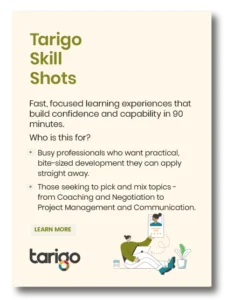
Tarigo Skill Shots give organisations complete control. You choose the modules that matter most from a menu of 30 topics across leadership, management, business skills and resilience and wellbeing training. You decide whether you need 3, 5, 10 or 15 modules.
The learning experience can be fully rebranded, so training feels like part of your internal development offering. This is ideal for organisations looking to build customised training programmes that fit their culture.
Flexible learning builds focused capability. Skill Shots make flexibility easy.