

One of the biggest misconceptions in product management education is that courses and certifications are the same thing. They’re closely related, but they’re not identical. Many providers use the terms interchangeably. A course is marketed as a certification. A certificate is presented as proof of expertise. By the time you’ve compared a few websites, it can become difficult to understand what you’re actually paying for. The distinction matters. Because if you’re investing time, money, and effort into your professional development, you want to know not only what you’ll learn, but also what recognition you’ll receive at the end of it. More importantly, you need to understand whether that recognition genuinely means something.
The Short Answer
- A product management course is the training itself.
- A product management certification is the formal recognition that the training has been completed.
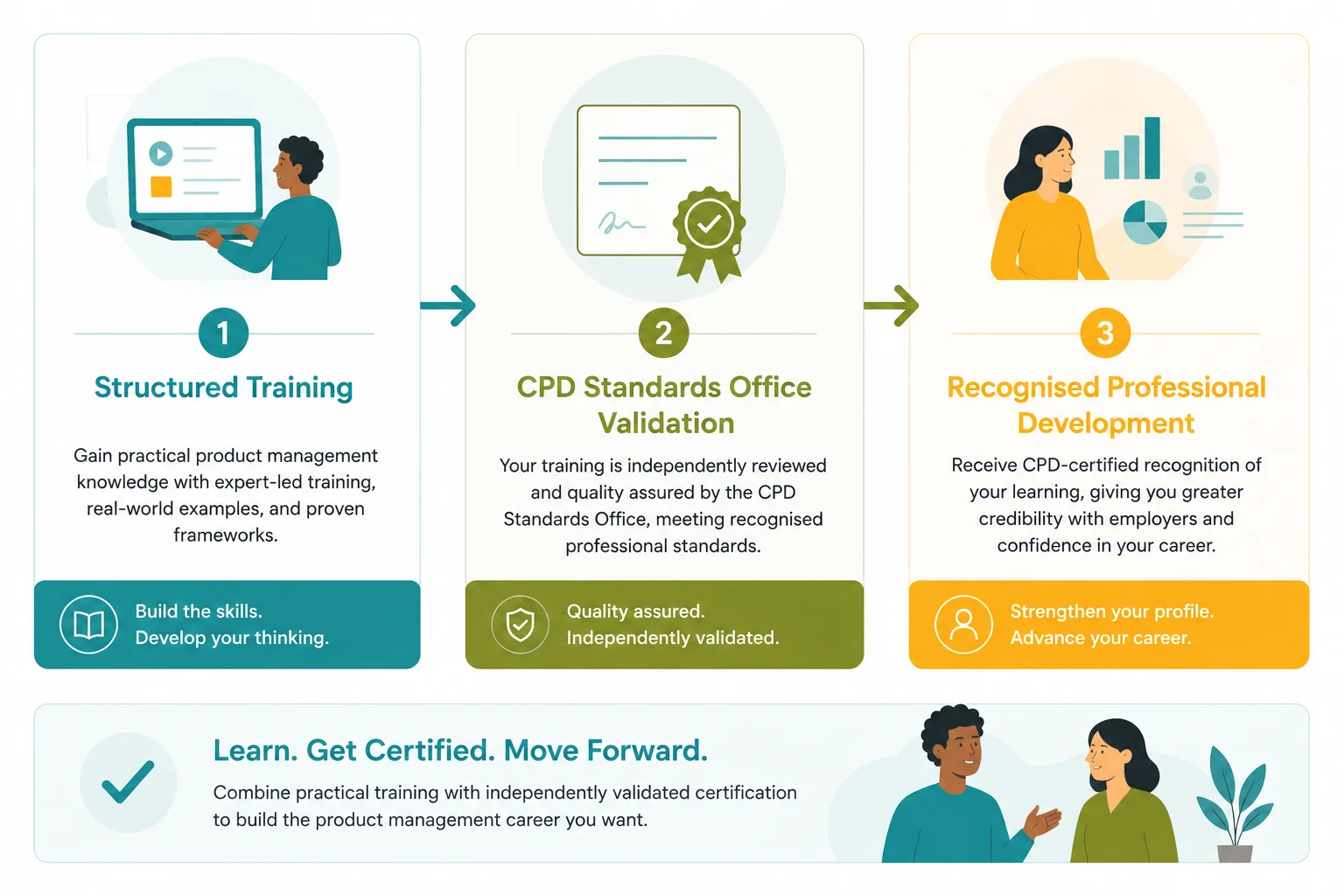
The strongest programmes combine both. They provide structured, practical product management training and recognised certification that validates the quality of that learning experience.
Why This Matters More Than Ever
Product management has become one of the fastest-growing professional disciplines across technology, SaaS, financial services, healthcare, ecommerce, and enterprise transformation. As demand for product skills has increased, so has the number of training providers. That’s positive in many ways, however, it has also created a challenge because not all courses are the same and not all certifications carry the same level of credibility. Today, employers and professionals are looking beyond simply receiving a certificate. They want confidence that the training behind it was relevant, structured, and professionally delivered.
What a Product Management Course Actually Provides
A product management course exists to help people learn. It introduces frameworks, techniques, and ways of thinking that help product professionals make better decisions. A well-designed course helps participants understand:
- How product teams operate
- How customer problems are identified and prioritised
- How strategic decisions are made
- How products create business value
- How product managers navigate uncertainty and competing demands
For many people entering product management, this structured learning provides the foundation they need to perform more effectively in their role. The course is where the learning happens.
What Product Management Certification Actually Means
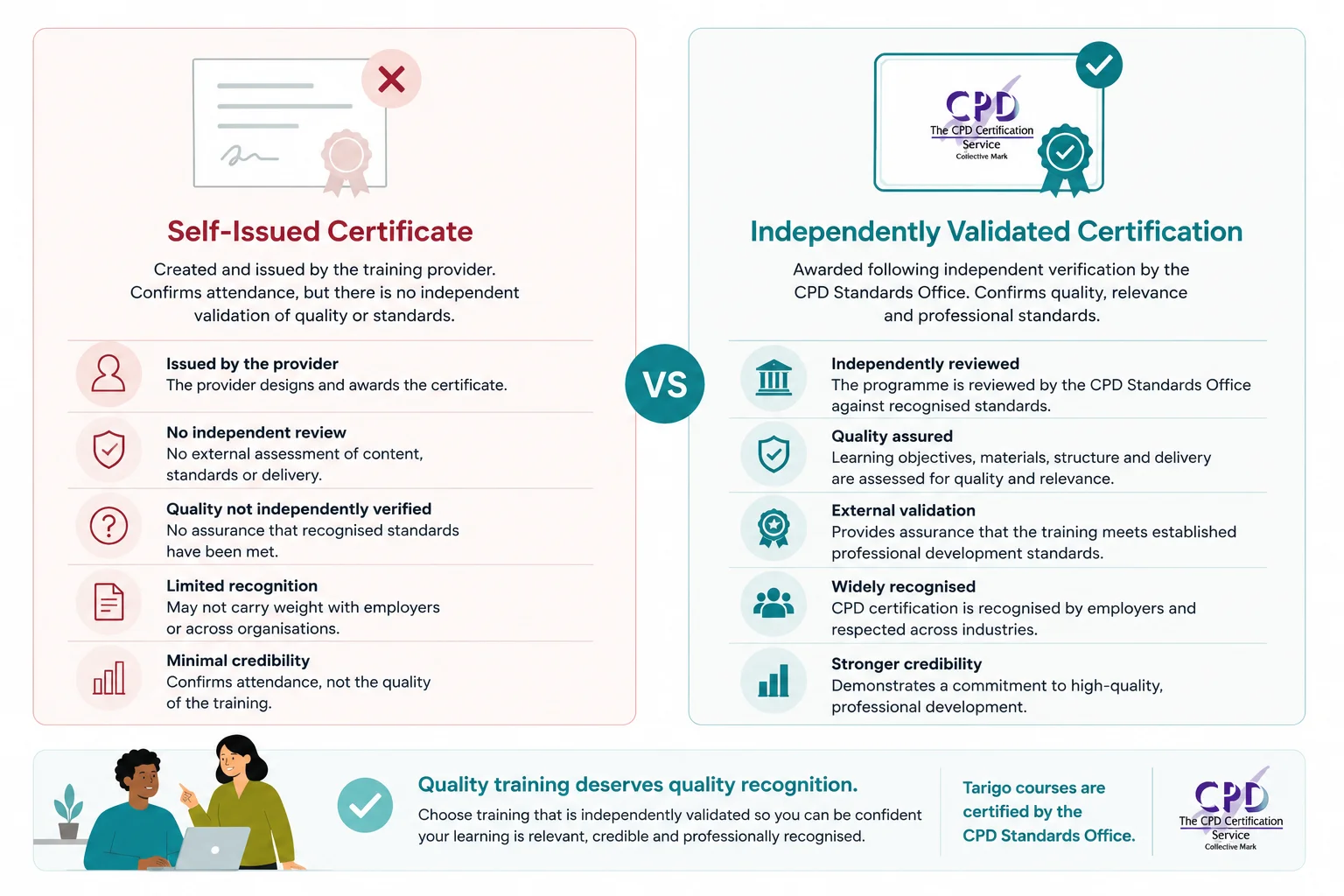
Certification is something different. Certification provides formal recognition that a participant has completed a defined programme of professional development. This is where quality can vary significantly between providers, some organisations simply create and issue their own certificates i.e. A participant attends a course and receives a certificate at the end, there is nothing inherently wrong with this approach, however, because the certificate is self-issued, there is no independent validation of the quality, structure, or standards behind the programme this is why it is important to understand what sits behind the certificate itself.
Not All Certificates Are Equal
This is one of the most misunderstood areas of professional training, many certificates look similar for example most contain:
- A logo
- A course title
- A participant name
- A completion date
But what those certificates actually represent can be very different as some certificates simply confirm attendance, others are supported by recognised external accreditation and quality standards. The difference is significant. A certificate backed by independent accreditation provides additional assurance that:
- The training programme has been reviewed
- Learning objectives have been clearly defined
- Materials meet recognised standards
- Delivery quality is maintained
- Professional development principles have been followed
That external validation creates credibility that self-issued certificates cannot provide on their own.
Why Independent Accreditation Matters
Independent accreditation introduces accountability. It means a training provider is not simply marking its own homework. Instead, an external organisation has reviewed the programme against recognised standards. For product management professionals, this provides greater confidence that the training they receive is relevant, structured, and professionally developed. For employers, it provides reassurance that the learning experience meets recognised professional development criteria. This is one reason accreditation has become increasingly important in professional education.
The Role of CPD Standards Office Certification
At Tarigo, our product management courses are certified by the CPD Standards Office. This means the programmes have been independently reviewed against recognised continuing professional development standards. The certification reflects the quality of:
- The course materials
- Learning objectives
- Programme structure
- Delivery approach
- Professional relevance
Importantly, CPD certification is not simply a certificate generated at the end of a course. It is independent recognition that the training itself meets defined quality standards. For participants, this provides confidence that they are investing in professionally recognised development. For organisations, it provides reassurance that teams are receiving high-quality, relevant product management training.
Why The Best Programmes Combine Courses and Certification
Some discussions frame courses and certifications as competing options. In reality, they work best together. A course provides the learning. Certification provides the recognition. One develops capability. The other validates the quality of the learning experience. When combined, they create a much stronger professional development pathway than either can provide alone. This is why many organisations increasingly look for programmes that offer both structured training and recognised certification.
What Should You Look For When Comparing Providers?
When evaluating product management education, don’t just ask: “Will I receive a certificate?”
Ask:
- Is the training focused on real-world product management?
- Is the programme professionally structured?
- Is the certification independently validated?
- Does the provider specialise in product management?
- Will the learning be relevant to modern product teams?
These questions often reveal far more than marketing claims alone.
Final Thoughts
The goal of product management training should never be collecting certificates. The goal should be becoming a more capable product professional. Courses provide the knowledge, frameworks, and practical understanding needed to grow. Certification provides recognition that the training has been delivered to recognised professional standards. The strongest programmes combine both. Because in today’s market, not all certificates are equal – and not all training is independently validated.
Ready to Develop Your Product Management Skills?
If you’re looking for product management training that combines structured learning with independently validated certification, explore Tarigo’s Product Management Certification pathway. Our programmes combine practical product management education with certification accredited by the CPD Standards Office, providing confidence in both the learning experience and the recognition that follows.